
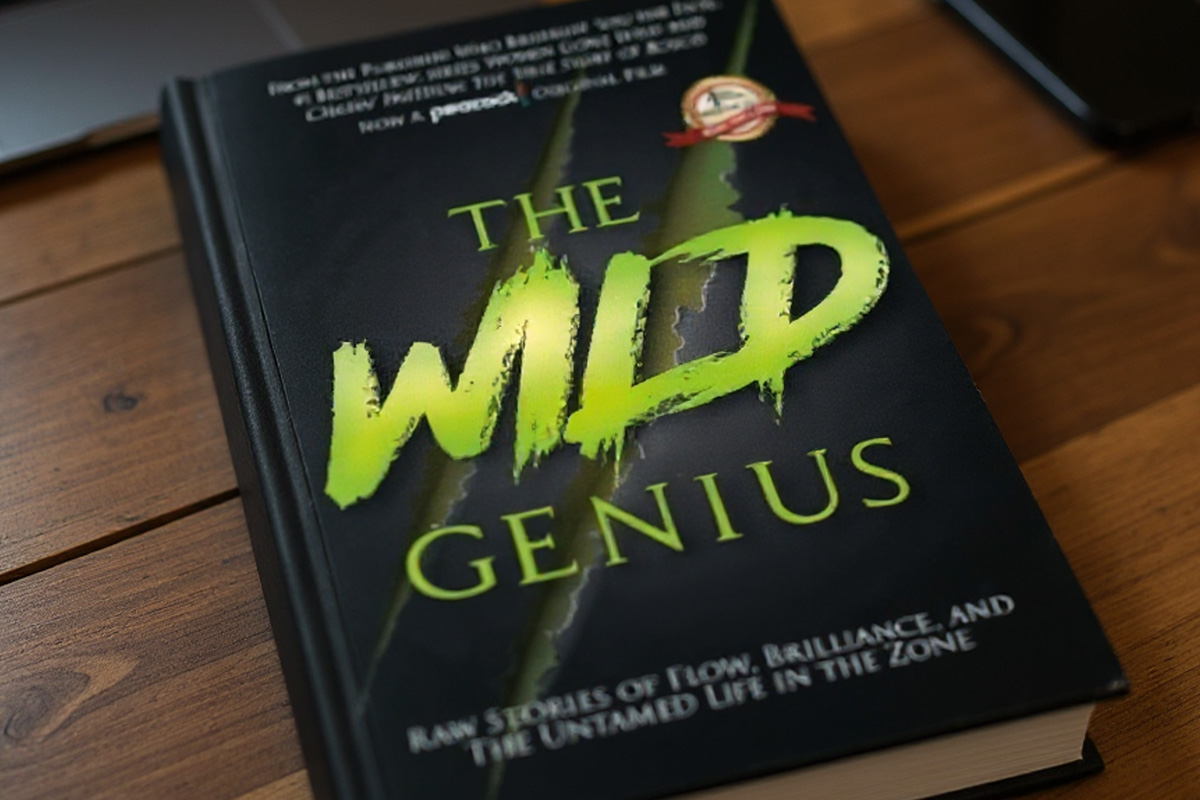
The Wild Genius brings together an extraordinary collection of insights from global thought leaders, entrepreneurs, and wellness experts, providing readers with a guide to cultivating personal brilliance and achieving meaningful impact. Across its chapters, the book emphasizes how adversity, authenticity, and intentional action converge to foster growth, resilience, and leadership. Each contributor shares a unique lens on transformation, yet all converge on the idea that genius is cultivated through experience, self-mastery, and service to others.
The editor, Jessica Sheehan, frames the collection with a powerful metaphor that appears throughout the book: the imagery of trees as symbols of natural, instinctive genius. She explains that just as a tree grows according to the blueprint already contained within its seed, without asking permission or following a prescribed path, so do people carry their own inner design from the beginning. Growth, in this view, is not manufactured but remembered, unfolding in alignment with an internal wisdom. Trees bend, stretch, twist, and root themselves in ways that reflect their environment, offering shade, shelter, and beauty simply by becoming what they were meant to be. The book invites readers to see each contributor’s story through this lens: not as a quest to acquire genius, but as a return to something innate, evolving, and already present within.
The opening chapter by Sir David T. Fagan sets the tone, highlighting how early hardship, financial collapse, and even periods of homelessness shaped his approach to communication and leadership. He details how personal adversity became the foundation of his “Word Genius” philosophy, showing that refining one’s story with honesty and intention can turn experiences into influence, impact, and a lasting legacy. Fagan’s journey from instability to success as a bestselling author, global speaker, media contributor, and producer underscores the central message of the book: authentic communication and deliberate self-expression can transform chaos into opportunity.
Donny Epstein continues this theme of transformation, exploring the paradox of feeling “not enough” as a catalyst for personal and collective growth. Drawing from The Seeker’s Code, he emphasizes that true transformation occurs when individuals access higher energy states, move beyond conditioned identities, and recognize their connection to a shared consciousness.
Linda Fisk brings a lens of leadership and resilience, particularly for high-achieving women. She frames influence not as a product of perfection or formal position but as the ability to navigate challenges while remaining authentic. Through her organization, LeadHERship Global, Fisk equips women to amplify their voices, cultivate networks, and advance both professional and personal development. Her chapter demonstrates that leadership is defined as much by presence, courage, and vision as by title, offering a model for authentic influence in contemporary business environments.
Sara Davison, known as The Divorce Coach, transforms her personal experience of sudden divorce into a global mission of support and empowerment. She has developed a comprehensive ecosystem that includes coaching, retreats, online programs, and corporate partnerships to guide individuals through emotional recovery, co-parenting challenges, and financial abuse. Davison emphasizes resilience, practical strategies, and community, illustrating that painful life experiences can inspire purpose, connection, and transformation, not only for clients but also for certified coaches trained through her programs.
Masati, founder of XI Meta Science, introduces readers to advanced frequency-based methods for human optimization. Drawing from profound near-death experiences, he demonstrates that alignment with intrinsic frequencies, rather than external achievement or effort, fosters clarity, resilience, and sustainable transformation. Having guided over 100,000 clients globally, including leaders, athletes, and creatives, Masati redefines success as a state of being. His work emphasizes that genius emerges when distortions are removed and individuals fully resonate with their highest selves, illustrating the potential of energy-based approaches in personal and professional growth.
 Dr. Tayo Denton, known professionally as Dr. Tayo, specializes in addressing the unique health needs of midlife women. As a women’s wellness strategist and physician, she combines conventional medicine with integrative, science-backed solutions to help women navigate perimenopause and menopause naturally. Through the Synergistic Hormone Balancing System™, her work, featured on CBS, NBC, ABC, and in publications like the Los Angeles Tribune Magazine, underscores the importance of systemic approaches to health and wellness for maintaining professional and personal vitality.
Diane Strand’s chapter highlights the intersection of creativity, entrepreneurship, and social impact.With over 21 years of experience as an entrepreneur, executive producer, best-selling author, and TEDx speaker, she has built multiple organizations, including JDS Video & Media Productions, JDS Actors Studio, and the nonprofit JDS Creative Academy. Strand’s work emphasizes entrepreneurship, inclusivity, and workforce development, demonstrating how art and media can be leveraged to launch careers and empower individuals. She showcases how vision, strategic execution, and social responsibility converge to create opportunities and lasting impact.
Craig Bruce, a transformational leadership strategist and bestselling author of The Fulfillment Revolution, explores leadership through the lens of personal alignment and holistic success. A former global executive who experienced burnout despite traditional career achievements, Bruce developed a model that integrates purpose, performance, and well-being. He helps leaders discover and operate from their unique genius, fostering sustainable brilliance while maintaining health, relationships, and fulfillment. His chapter underscores that effective leadership arises from emotional resilience, self-awareness, and the ability to align personal vision with professional responsibilities.
David Cunningham, a multidisciplinary artist and award-winning cinematographer, shares insights on narrative and creative impact. His experience working with high-profile talent across photography, film, and storytelling illustrates how art can shape perception, influence understanding, and foster personal growth. Cunningham emphasizes that the creative process is a vehicle for transformation, helping individuals explore their experiences, craft meaningful narratives, and express their authentic selves.
 Shannon D. Hughes, a mindset and speaker coach, bestselling author, and entrepreneur, provides tools for motivation, momentum, and purpose. Through his programs, books, and shows like The Movement, he empowers individuals to take bold action, unlock potential, and achieve meaningful results. Hughes’ focus on disciplined habits, mindset, and inspired action reinforces the book’s overarching themes of intentionality and self-mastery.
Megan Schwan, CEO of Sidekick Accounting, offers practical guidance for entrepreneurs seeking financial clarity and control. With expertise in accounting and Profit First-certified strategies, she supports small business owners—particularly women and minority entrepreneurs—in making data-driven decisions and scaling sustainably. Schwan’s work demonstrates how financial mastery underpins broader professional success, empowering business owners to navigate growth with confidence.
Andie Monet emphasizes the role of mindset, confidence, and habit in achieving personal freedom and fulfillment. She shares strategies to cultivate consistency, joy, and financial independence, highlighting the interplay between internal beliefs, actions, and measurable outcomes. Monet’s practical approach complements other chapters by illustrating that intentional habits and self-trust are central to realizing potential.
Dr. Moirar M. Leveille shares her holistic framework, MindfulYess, which integrates health, relationships, wealth, love, and spirituality into a cohesive approach to personal genius. Drawing from her own experience with Graves’ disease, she illustrates the importance of self-trust, balance, and conscious integration of life’s elements. Her work emphasizes that achieving personal brilliance requires attention to all areas of life, reinforcing the interconnected nature of wellness, purpose, and achievement.
Melanie Soloway explores resilience and spiritual growth, combining lessons from her upbringing in apartheid-era South Africa, her work in the U.S. justice system, and the challenges of parenthood. She introduces tools such as P.A.U.S.E., L.O.V.E., and T.R.U.S.T., which foster presence, forgiveness, and emotional literacy. Soloway demonstrates how navigating personal and familial challenges can serve as a model for spiritual and emotional growth, highlighting the integration of self-awareness, leadership, and care for others.
Julie Olson’s chapter traces the development of curiosity, independence, and resilience through early life experiences. From family loss during the Big Thompson flood to sports and community involvement, Olson emphasizes the lessons learned from adversity, adventure, and the pursuit of personal goals. Her story illustrates how early life experiences cultivate courage, discipline, and the drive to explore unconventional paths.
Angela Legh provides guidance on reclaiming inner power and embracing unique gifts. Through her transformational coaching, writing, and speaking, she empowers women to navigate life transitions, overcome limiting beliefs, and illuminate their potential. Legh demonstrates how self-awareness, authenticity, and strategic action enable individuals to create meaningful, purpose-driven lives.
Beth Close examines genius as a collective, rather than solely individual, force. Focusing on women, she challenges the notion of the “lone genius” and emphasizes the power of collaboration, mentorship, and shared experiences. Using examples like the #MeToo movement and women in leadership, Close shows that vulnerability, trust, and community amplify impact and foster resilience. Her chapter reinforces the importance of mutual support in achieving extraordinary outcomes.
Cosmas Dar addresses self-mastery as the foundation for personal and financial freedom. By cultivating intuitive attunement and disciplined focus, he illustrates how individuals can access inherent genius and achieve breakthroughs in creativity, innovation, and leadership. Dar uses historical examples, including Einstein, Tesla, and George Washington Carver, to show how deep concentration and persistence unlock transformative potential.
Libbi Lovejoy shares her experience as a blind individual who developed heightened intuition and decision-making capabilities. She provides guidance on reconnecting with innate intelligence through meditation, journaling, and present-moment awareness. Lovejoy demonstrates that aligning mind, body, and soul enhances clarity, flow, and purposeful action, offering readers a model for intuitive leadership and personal empowerment.

Finally, Dr. Cheri Sotelo details her transformation from a “wild spirit” to a “wild visionary.” Emphasizing resilience, strategy, and adaptability, she showcases how defying societal norms and mastering multiple industries—from mental health clinics to high-intensity gyms—can create a legacy of impact. Sotelo underscores the importance of knowing every facet of one’s work, embracing failure as a teacher, and leading with vision, illustrating that personal genius is intertwined with service to others.
Collectively, The Wild Genius highlights the varied paths through which individuals cultivate resilience, insight, and transformative impact. From personal health and wellness to leadership, creativity, financial mastery, and intuitive development, each chapter offers strategies, examples, and lived experience demonstrating that genius is cultivated through perseverance, conscious choice, and alignment with one’s purpose. The book reinforces the principle that extraordinary achievement emerges not from circumstance but from intentionality, courage, and service, offering readers a roadmap for personal and professional evolution across multiple domains of life.
The Wild Genius is available now at wlifebook.com/genius and on Amazon.

Our publication features several staff writers, allowing us to report on different events and offer expert perspectives across various subjects.