
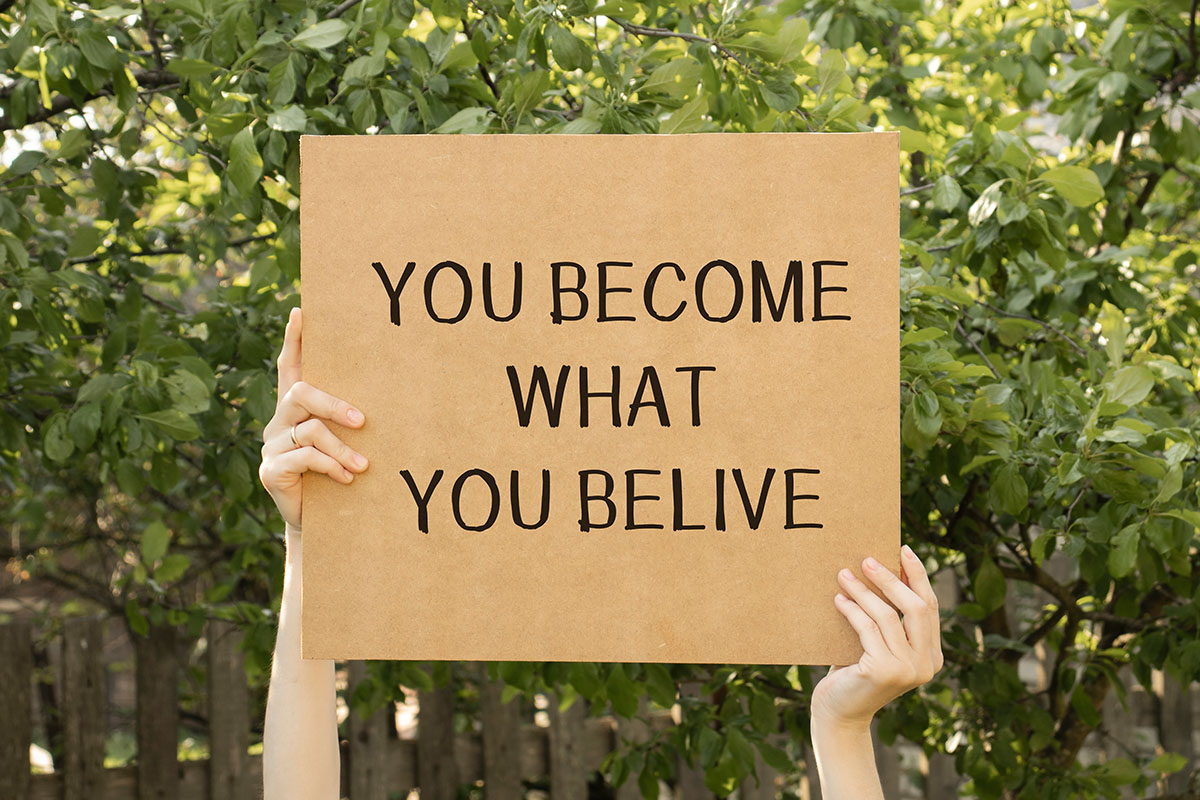
Are you lucky?
Your answer to that question, and indeed what you believe about how enchanted your life is, has a profound impact on your happiness, your expectations, and the reality you experience each day.
Some people move through life believing opportunities appear for them, that things somehow work out, that they are supported, capable, guided, or blessed. Others unconsciously expect disappointment, struggle, rejection, or failure. Over time, those beliefs begin shaping not only perception, but behavior, emotional responses, confidence, and the opportunities people notice or pursue.
There is a powerful truth I have witnessed repeatedly through my work as a hypnotherapist: the unconscious mind is always listening.
It listens to the words we speak out loud. It listens to the stories we repeat internally. It listens to the labels we place on ourselves, the fears we rehearse, the expectations we carry, and the beliefs we unconsciously reinforce day after day.
Most people dramatically underestimate the power of self-talk because they assume thoughts are fleeting. But the unconscious mind is always paying attention, and over time, repeated thoughts become beliefs. Those beliefs shape habits, behaviors, emotional responses, confidence levels, relationships, and ultimately the reality we experience.
The Power of Internal Programming
This is why language matters so deeply. There is a famous quote often attributed to Henry Ford: “Whether you think you can, or you think you can’t, you’re right.”
That statement aligns closely with what I have seen working with clients over the years. People often arrive carrying unconscious beliefs they did not even realize were running in the background of their lives:
“I’m not worthy.”
“I always fail.”
“I’ll never change.”
“I don’t deserve success.”
“I’m stuck this way.”
These beliefs are rarely just intellectual thoughts. They become internal programming. And once the unconscious mind accepts something as true, it begins organizing behavior and perception around that belief. That is what is called a fixed mindset. Being open to the possibilities and reframing your reality will allow you to have a growth mindset. It begins with understanding how our thoughts and words shape reality and how our beliefs shape our quality of life.
Why Hypnosis Works
This is one of the reasons hypnosis can be so powerful.
Contrary to the myths people sometimes imagine, hypnosis is not mind control or unconsciousness. It is a deeply relaxed and highly focused state where the conscious mind quiets down enough for the unconscious mind to become more receptive to new ideas, healthier patterns, and updated beliefs.
In many ways, hypnosis works because it allows us to bypass the constant mental chatter and access the deeper conditioning underneath. That deeper conditioning is where habits, emotional associations, fears, triggers, patterns, and self-concepts are stored.
When someone wants to stop smoking, break a destructive cycle, release anxiety, improve confidence, heal emotional wounds, or change long-standing habits, we are often working not just with behavior itself, but with the unconscious beliefs beneath the behavior.
The unconscious mind is highly receptive to suggestion, particularly when those suggestions align with what a person genuinely wants to change or create. In hypnotherapy, we work to install healthier beliefs and patterns that support the client’s chosen goals and desired outcomes.
Words Become Conditioning
The unconscious mind responds strongly to repetition, emotion, imagery, and suggestion. That is why self-talk matters so much. Repeated language becomes conditioning.
There is an old saying that words are called “spelling” because language itself casts spells. Whether viewed spiritually or symbolically, there is wisdom in that idea. Words shape perception. Perception shapes behavior. Behavior shapes reality.
The Power of Suggestion
We see evidence of this concept everywhere in society, often in ways people barely notice.
For example, when someone says something they fear could happen, people often instinctively “knock on wood.” It is fascinating because culturally, we already understand at some level that words carry power and that speaking something aloud feels significant. We recognize, consciously or unconsciously, that language affects expectation and energy.
In hypnotherapy practices, there are also techniques designed to interrupt or reject suggestions we do not want the unconscious mind to absorb.
One example is a pattern interruption where we snap across our face and firmly say, “Free from that!” The purpose is symbolic but also neurological and psychological. It signals to the unconscious mind not to attach significance to a statement, belief, or suggestion, whether it came from someone else or from our own mouths.
That may sound unusual to some people, but when you understand how suggestible the unconscious mind can be, it begins to make sense why intentionally interrupting negative conditioning matters.
Be Careful What You Repeatedly Declare
The unconscious mind does not always distinguish between a joke, a passing comment, or a repeated declaration. If someone constantly says:
“I’m always sick.”
“I’m terrible with money.”
“I never get lucky.”
“I’m such an idiot.”
The unconscious mind hears repetition and identity reinforcement. This is why I often tell people: do not say out loud what you do not want to become true. I have learned to be very careful about how I speak.
That does not mean denying reality or pretending challenges do not exist. Healthy emotional honesty is important. But there is a profound difference between acknowledging a temporary experience and building an identity around it.
Saying “I am struggling right now” is very different from saying “I am a failure.”
One describes a moment.
The other creates a self-concept.
Awareness Creates Change
As a hypnotherapist, I have watched people transform when they begin changing the language they use about themselves. When they stop reinforcing limitation. When they become aware of the unconscious scripts they inherited from childhood, relationships, trauma, culture, or repetition.
Because once awareness enters the picture, change becomes possible.
As a hypnotherapist, and through my background in psychology, child development, and forensic interviewing, I have become deeply aware of how profoundly our unconscious beliefs shape our daily experiences, emotional wellbeing, behaviors, and sense of self. Whether working with clients in person or through virtual sessions, I have seen how increasing awareness of these unconscious patterns can begin transforming the quality of a person’s life.
Notice your beliefs.
Challenge your beliefs.
Change your beliefs.
The unconscious mind is incredibly powerful, but it is also trainable. New emotional responses can be created. New habits can be formed. Healing can occur. Confidence can grow.
It begins with awareness of the words we speak and the beliefs we continuously feed.

Check Your Beliefs
The unconscious mind is always listening.
The question is: what are you teaching it to believe?

Jessica Sheehan is a columnist, bestselling author, and freelance writer with bylines in publications ranging from Los Angeles Tribune Magazine to USA Today. She is also a managing editor and certified hypnotherapist with background in child development, communication, and human behavior.